As the Final Fantasy 7 remake trilogy approaches its grand finale next year, devoted fans of the legendary RPG franchise are already turning their attention to which beloved classic might receive the next modern reimagining. The question arose during the recent Final Fantasy Fan Festival in Berlin, where series producer Naoki Yoshida addressed the elephant in the room: remaking some of the most requested titles would require splitting them into multiple games, a commitment that could span over a decade of development.
Final Fantasy 6 has emerged as the clear frontrunner among fan requests, with Final Fantasy 8 and 9 also generating significant interest. However, Yoshida was quick to temper expectations with a dose of reality. “Of course I understand the feelings of the players, but you’ve got to think about it,” Yoshida explained through a translator. “Look at Final Fantasy 6, it’s such an incredibly huge game. The scale is just immense. If we did remake those other titles, we’d probably end up having to release them in four or maybe even five installments.” This frank assessment highlights the enormous challenge Square Enix faces in satisfying fan demand while maintaining the quality standards that the franchise demands.
The Monumental Scope of Classic Final Fantasy Titles
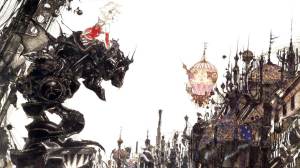
Yoshida’s concerns are far from exaggerated when examining the sheer scale of these classic adventures. Final Fantasy 6, originally released in 1994 for the Super Nintendo Entertainment System, featured over fourteen playable characters, each with unique backstories, abilities, and character arcs. The game’s narrative encompasses world-ending catastrophes, political intrigue, and deeply personal stories of loss and redemption. Its villain, Kefka Palazzo, remains one of gaming’s most memorable antagonists, and the game’s second half features a completely transformed world that players must explore to reunite their scattered party. Squeezing all of this content onto a single SNES cartridge was considered a technical marvel at the time, and recreating it with modern graphics and expanded storytelling would indeed be a massive undertaking.
Final Fantasy 8 and 9, released during the PlayStation era, present their own unique challenges. Final Fantasy 8 introduced the controversial Junction system and featured a complex time-traveling narrative that explored themes of memory and identity. Final Fantasy 9, meanwhile, served as a love letter to the series’ roots, featuring a massive world with four continents, elaborate Active Time Event systems, and a story that touched on existential themes of mortality and purpose. These games may appear dated by contemporary visual standards, but their content density rivals or exceeds many modern releases, making faithful remakes an enormous investment of time and resources.
The Challenge of Modern Game Development
The complexity of modern game development has grown exponentially since the 1990s. What once required small teams of developers working with relatively simple tools now demands hundreds of specialists across multiple disciplines including motion capture, voice acting, photorealistic rendering, and complex physics systems. The Final Fantasy 7 Remake serves as a perfect case study in this evolution. The original 1997 game, while groundbreaking for its time, covered the entire story across three PlayStation discs. The remake, in contrast, expanded just the Midgar section into a full-length game, with the subsequent Rebirth and upcoming Revelation completing the trilogy. This expansion wasn’t merely padding but rather a deepening of character relationships, world-building, and gameplay systems that modern audiences expect.
Maintaining team continuity has proven essential for projects of this magnitude. The majority of developers who worked on Final Fantasy 7 Remake remained with the project through Rebirth and will see it through to completion with Revelation. This consistency ensures institutional knowledge is preserved, character interpretations remain coherent, and the technical foundations built early in development continue to serve the project. Building such a team for a potential multi-part Final Fantasy 6 remake would require similar long-term commitment from both Square Enix and its employees.
HD-2D: The Perfect Middle Ground
While a full 3D remake of classic Final Fantasy titles may remain impractical for the foreseeable future, Square Enix has quietly been perfecting an alternative approach that could satisfy nostalgic fans without requiring decade-long development cycles. The HD-2D visual style, which combines lovingly crafted retro-inspired pixel art with modern 3D environments, dynamic lighting, and sophisticated visual effects, has proven immensely successful for the company. Titles like Octopath Traveler, Triangle Strategy, and Live A Live have demonstrated that this approach resonates deeply with players seeking nostalgic experiences enhanced by contemporary technology.
The upcoming Final Fantasy Resonance showcases this style applied directly to the Final Fantasy universe, reimagining a mobile title as a dedicated single-player experience. While HD-2D development certainly isn’t simple, Square Enix’s consistent output of titles in this style suggests a more streamlined pipeline compared to massive 3D productions. The Dragon Quest III HD-2D Remake has been particularly well-received, and its producer, Masaaki Hayasaka, has publicly stated that Final Fantasy 6 would top his list for a potential HD-2D project. This internal enthusiasm, combined with the format’s proven success, makes HD-2D remakes an increasingly compelling option for Square Enix’s classic RPG library.
Final Fantasy 6’s steampunk-meets-magic aesthetic, with its detailed sprite work and Mode 7 effects, seems practically designed for the HD-2D treatment. The original game pushed the SNES to its absolute limits, and seeing those iconic visuals reimagined with modern lighting, particle effects, and environmental depth could create something truly special. Such an approach would honor the original while making it accessible to new generations of players, potentially serving as the best of both worlds for a franchise that continues to define the role-playing genre.
Expert Opinion: Square Enix appears to be at a strategic crossroads regarding its remake philosophy. The HD-2D approach represents not just a cost-effective alternative but potentially the most artistically faithful way to preserve what made these classics special. Given the commercial success of Dragon Quest III HD-2D and the internal advocacy from key producers, we may see an official announcement of Final Fantasy 6 in HD-2D format within the next two to three years, likely timed to coincide with the game’s 35th anniversary in 2029.