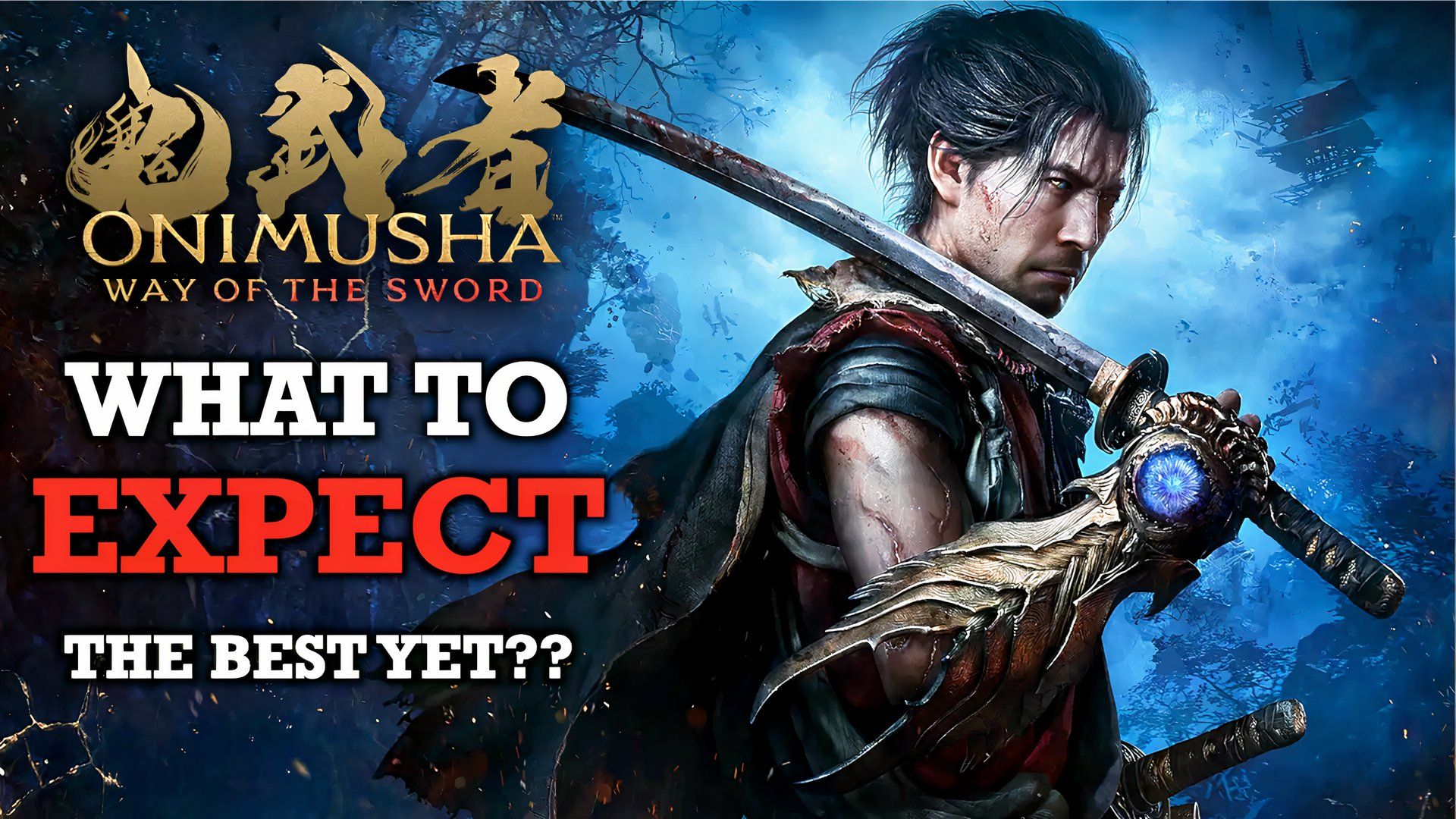
After nearly two decades of silence, Capcom is finally returning to one of its most beloved franchises with Onimusha: Way of the Sword. The upcoming title promises to blend historical authenticity with supernatural elements, drawing heavily from Japanese folklore, real historical figures, and the rich cultural heritage of feudal Japan. As anticipation builds among fans and newcomers alike, the game appears poised to deliver an experience deeply rooted in the legendary tales of samurai warriors and demonic entities that made the original series so memorable.
The announcement has sent ripples through the gaming community, particularly among those who remember the original Onimusha series that captivated PlayStation 2 audiences in the early 2000s. Capcom’s decision to revive this dormant franchise comes at a time when action games set in feudal Japan have experienced a remarkable renaissance, with titles like Ghost of Tsushima, Sekiro: Shadows Die Twice, and Nioh proving that Western and global audiences have an insatiable appetite for samurai-themed adventures.
The Legend of Miyamoto Musashi
Central to Onimusha: Way of the Sword’s narrative foundation is the legendary figure of Miyamoto Musashi, widely considered Japan’s greatest swordsman and a cultural icon whose influence extends far beyond martial arts. Born around 1584, Musashi lived through one of the most turbulent periods in Japanese history, participating in numerous duels and battles that would cement his reputation as an undefeated warrior. His most famous confrontation came in 1612 against Sasaki Kojiro on Ganryu Island, where Musashi reportedly arrived late and wielded a wooden sword carved from an oar, defeating his rival in a single, decisive blow.
Musashi’s philosophical treatise, “The Book of Five Rings,” written shortly before his death in 1645, remains influential to this day, studied by martial artists, business leaders, and strategists worldwide. His teachings emphasized adaptability, the importance of understanding multiple disciplines, and the spiritual dimension of combat. By incorporating Musashi’s legacy into the game, Capcom taps into centuries of accumulated mythology and cultural significance, providing players with a protagonist whose real-life accomplishments already border on the supernatural.
Kyoto: The Heart of Japanese Culture and Conflict
The choice of Kyoto as a primary setting for Onimusha: Way of the Sword carries profound significance. For over a millennium, Kyoto served as Japan’s imperial capital, a center of political power, artistic achievement, and spiritual importance. The city survived the devastation that befell many Japanese urban centers during World War II, leaving its ancient temples, shrines, and traditional architecture remarkably intact. This preservation makes Kyoto an ideal backdrop for a game seeking to transport players to feudal Japan with historical authenticity.
During the Sengoku period, which forms the historical backdrop for the Onimusha series, Kyoto witnessed countless power struggles between rival daimyo lords seeking to control the shogunate and, by extension, all of Japan. The Onin War of 1467-1477 left much of the city in ruins, and subsequent conflicts continued to reshape its political landscape. This era of constant warfare and shifting allegiances provides fertile ground for storytelling, allowing the game to weave supernatural elements into genuine historical chaos.
Japanese Folklore and the Supernatural
The Onimusha franchise has always distinguished itself through its incorporation of Japanese folklore, particularly the concept of oni—powerful demons that feature prominently in traditional mythology. These supernatural beings, often depicted with horns, wild hair, and terrifying visages, serve as both enemies and sources of power within the games. The series’ signature mechanic of absorbing demonic souls to enhance abilities draws directly from folklore traditions where warriors could gain supernatural strength through spiritual means.
Beyond oni, Japanese mythology encompasses a vast pantheon of yokai—supernatural creatures ranging from mischievous spirits to terrifying monsters. The kappa, tengu, and yurei all represent different aspects of the Japanese spiritual worldview, where the boundary between the mortal realm and the supernatural remains permeable. Way of the Sword appears poised to explore this rich mythological tapestry, promising encounters with creatures that have haunted Japanese imaginations for centuries while introducing them to global audiences through interactive entertainment.
A New Chapter for a Beloved Franchise
The original Onimusha series, which began in 2001, sold millions of copies worldwide and helped establish Capcom’s reputation for blending action gameplay with cinematic storytelling. The franchise notably featured digital recreations of famous Japanese actors, including Takeshi Kaneshiro and Jean Reno, lending star power to its supernatural narratives. With Way of the Sword, Capcom has the opportunity to leverage modern technology—including advanced motion capture, photorealistic graphics, and sophisticated combat systems—to create the definitive Onimusha experience that longtime fans have awaited.
Expert Opinion: Capcom’s timing with Onimusha: Way of the Sword appears strategically calculated, capitalizing on proven market demand for samurai-themed games while differentiating through supernatural elements that competitors haven’t fully explored. If the studio can successfully merge the historical gravitas of Miyamoto Musashi’s legend with the demon-hunting action that defined the original series, Way of the Sword could potentially revitalize the franchise for a new generation while satisfying nostalgic veterans who have waited eighteen years for this moment.